The Companies Winning the Talent War Are Those Treating Wellness as Infrastructure, Not Initiative
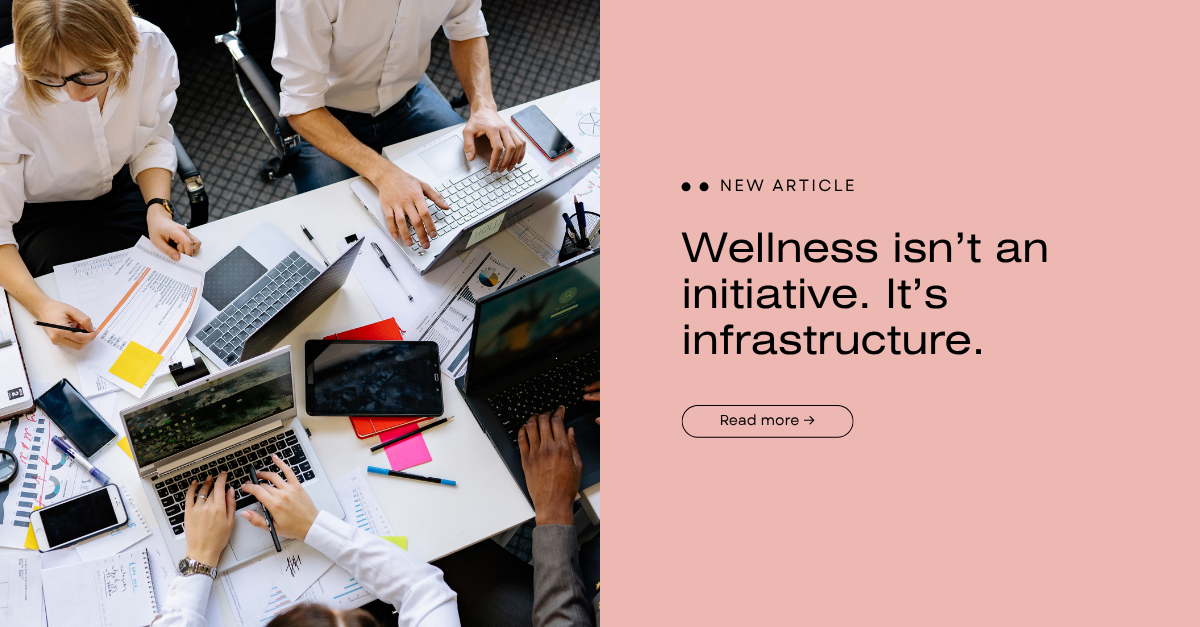
The real competitive advantage isn’t just technology, perks, or hybrid policies; it’s how deeply wellness is built into the foundation of your organization.
For too long, wellness has been treated as an initiative, something added on through yoga Fridays, meditation apps, or subsidized gym memberships. However, the organizations truly attracting and retaining top talent are those that view well-being as an integral part of their infrastructure by incorporating it into how people experience their work every day. We spend most of our waking hours in a work setting; it's vital to consider wellness as a priority.
Infrastructure is permanent. It supports everything else. When wellness is treated this way, it’s no longer dependent on HR calendars or quarterly budgets; it becomes part of the system itself.
That looks like:
Healthy building design that supports light, air quality, and movement.
Policies with purpose, from flexible schedules to inclusive parental leave.
Leadership modelling well-being, not just messaging it.
Metrics that matter: tracking employee engagement, burnout, and belonging alongside profit and performance.
These choices send a powerful message that we care about people as much as we care about output. And that’s exactly what today’s workforce, especially Millennials and Gen Z are looking for. After all, the “war for talent” is not about higher salaries anymore; it’s about belonging, purpose, and mental health.
Employees are asking:
“Does this company support me as a whole person?” “Will I be well here?”
Organizations that can answer yes through their culture, spaces, and policies will not just attract talent, they’ll keep it. A Harvard Business Review study found that companies prioritizing well-being see 3x higher retention and 2x higher engagement. Meanwhile, burnout remains the number one driver of turnover across industries.
Incorporating wellness as infrastructure isn’t a one-time project; it’s an evolution. Start with three levers. Begin with design by optimizing physical and digital workspaces for comfort, light, and connection. Second, look into your policy and build structures that give flexibility, trust, and autonomy. Lastly, culture fosters leadership that listens, empathizes, and models self-care. This is where frameworks like WELL Certification and evidence-based workplace design can help organizations translate good intentions into measurable impact.
Wellness isn’t the perk, it’s the plan. The companies treating it that way are becoming the ones people are proud to build their careers with. If you’re exploring ways to embed wellness into your workplace strategy, through design, policy, or education, let’s connect. Because the future of work isn’t just productive. It’s well.
Workplace wellness, employee well-being, corporate wellness strategy, WELL Building Standard, sustainable workplace design, employee retention, workplace culture, wellness infrastructure