Beyond the Chair: Why Office Ergonomics Needs a Movement Revolution
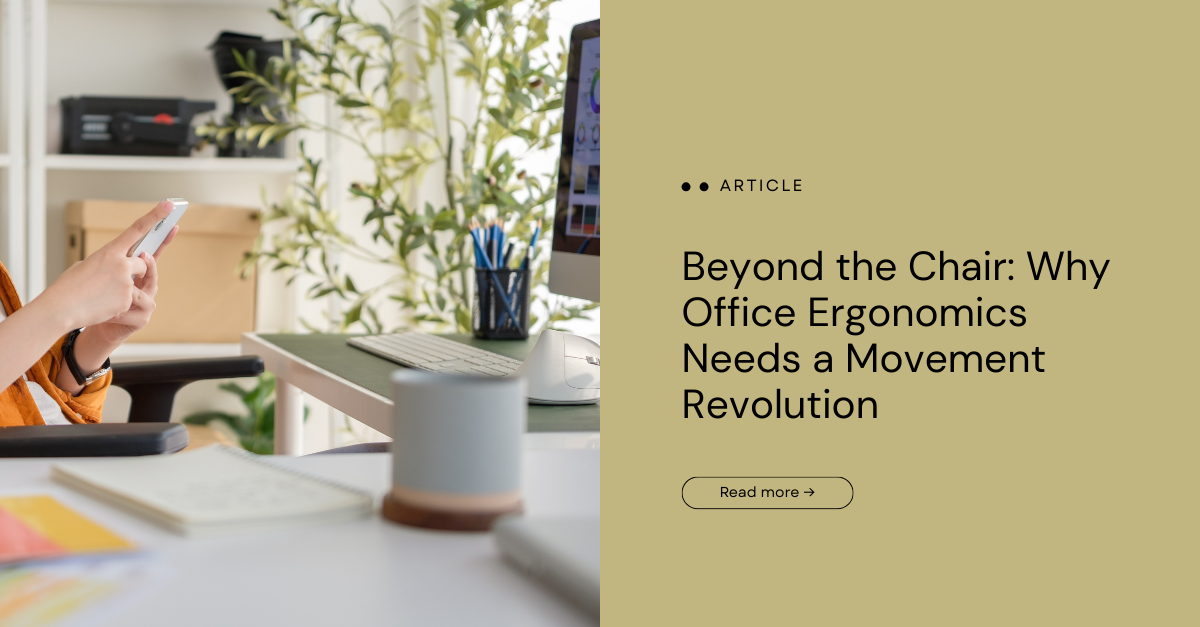
The Truth is, the old view of ergonomics is outdated. For the past decade, “ergonomics” meant a comfortable chair or an adjustable desk. However, the future of workplace well-being isn’t about static comfort; it’s about dynamic health.
Our workplaces is sedentary by design. The average office employee spends over 10 hours sitting each day, leading to increased risks of musculoskeletal disorders, cardiovascular disease, and reduced productivity. Even the best ergonomic chair can’t fix that.
The WELL Building Standard reframes how we think about ergonomics. Instead of asking, “How can we make sitting more comfortable?” it asks, “How can we design spaces that encourage movement?”
Under the Movement concept, WELL promotes active design strategies, everything from layout decisions to policy incentives, to help people move naturally throughout the day.
“Designing for movement is designing for life. It’s about creating spaces that work with the human body, not against it.”
Practical examples of movement-supportive design include:
Sit-to-stand desks that encourage posture variation.
Centralized amenities (like printers or coffee stations) that prompt walking.
Visible stairs and biophilic pathways that invite exploration.
Microbreak prompts integrated into workflow tools.
These small environmental cues collectively reduce sedentary time and improve circulation, focus, and energy. When companies design for movement, they’re not just promoting wellness; they’re improving performance.
Studies show that employees who move more report 12% higher engagement (Gensler Workplace Study). Additionally, organizations see reductions in sick days and musculoskeletal claims.
True office ergonomics is no longer about how we sit; it’s truly about how we move, rest, and recover throughout the day. Movement-rich environments are the new productivity tools. As organizations strive to attract and retain top talent, incorporating movement into workplace design will become non-negotiable.
As leaders, designers, and wellness professionals, it’s time to rethink what ergonomics means in 2025. Let’s move beyond the chair and design spaces that keep people moving, thriving, and well.
#WELLBuildingStandard #OfficeDesign #WorkplaceWellness #MovementMatters #Ergonomics #HealthyWorkplace #SustainableDesign #WellbeingAtWork